Research
Research is how your planet grows. There are no buildings to construct — your entire progression flows through a single research tree of 44 technologies across eight branches. Each unlock changes what you can build, how much you produce, how far you can scan, or how fast you can move.
You can research only one technology at a time, but multiple branches can be ordered in sequence. The order you research things matters: the wrong branch first means a slow start, while the right one snowballs your economy or military before competitors get going.
This page covers all 44 nodes — costs, ticks, prerequisites, and effects — for the current v4.2 build (engine v2).
How research works
Research is initiated from the Research screen. Pick a technology that meets its prerequisites (the previous node in its branch must already be completed), pay its cost in Titanium, Silicon, and sometimes Uranium, and wait the indicated number of ticks. When the ticks elapse, the effect activates immediately.
| Behavior | Detail |
|---|---|
| One research at a time | Only one tech is active per planet. Premium Commander can queue one research behind the running one — it must be a node that unlocks when the current one finishes, the cost is taken when you queue, and cancelling refunds in full |
| Cost paid upfront | Resources are deducted at the moment you start the research, not when it completes |
| Prerequisites enforced | You cannot start a research until its prerequisite is complete |
| No race differences | Research costs and ticks are identical across UEC, ODO, ATH, and STC. The Void doesn't research — they're NPCs |
| No buildings | All progression is through the research tree. There are no structures to build to accelerate research |
| Effects are permanent | Once researched, the effect persists for the entire season |
XP rewards: every completed research grants 6 Commander XP (×2 in Speed Rounds). See Commanders.
The eight branches
| Branch | Nodes | What it does |
|---|---|---|
| Resources | 9 | Increases Ti/Si/Ur production per tick |
| Shipyard | 6 | Unlocks each ship class (Fi → Bs), gives +1 build slot at Fr and Cr |
| Scanning | 6 | Unlocks scans, raises success rate up to +40% over the base |
| Counter-Intel | 5 | Blocks enemy scans, reveals scanner identity, reveals incoming fleet composition |
| Engines | 4 | Reduces fleet ETA by up to −3 ticks and cuts fuel cost by 45% |
| PDS & Shields | 7 | Unlocks the 5 PDS classes + the four Orbital Shield tiers |
| Trading | 4 | Extends trade reach: galaxy → cluster → The Void → all clusters |
| R&D | 3 | ★ New in v4.0 — expedition vessels that hunt orbitals and antimatter |
You don't need to commit to one branch — you can interleave researches freely. But each branch has a critical path: lower tiers unlock higher tiers within that branch only.
Shipyard branch
The critical path for any planet. Each tier unlocks the next ship class. You cannot build any class you haven't researched.
| # | Research | Ticks | Cost (Ti / Si / Ur) | Unlocks |
|---|---|---|---|---|
| 1 | Fighter Operations | 6 | 400 / 400 / 0 | Fighters + Orbital Pods |
| 2 | Corvette Engineering | 12 | 2 500 / 2 500 / 0 | Corvette class |
| 3 | Frigate Engineering | 22 | 5 000 / 5 000 / 0 | Frigates + Orbital Transports, +1 build slot |
| 4 | Destroyer Engineering | 30 | 10 000 / 10 000 / 0 | Destroyer class |
| 5 | Cruiser Engineering | 40 | 20 000 / 20 000 / 0 | Cruiser class, +1 build slot |
| 6 | Battleship Engineering | 54 | 35 000 / 35 000 / 5 000 | Battleship class |
Cumulative cost to full Bs unlock: 72 900 Ti / 72 900 Si / 5 000 Ur = 150 800 total resources across 164 ticks.
In a 30-min-tick Season, that's 164 × 30 minutes = ~82 hours of continuous research to fully unlock Battleships from a fresh start. In a Speed Round (5-min ticks), the same chain takes ~14 hours.
The +1 build slot bonuses at Frigate (slot 2) and Cruiser (slot 3) are why some players prioritize shipyard above all else: each extra slot lets you produce ships in parallel.
First research, every season
Fighter Operations is almost always the right first pick. You start with 1 Commander Point and a planet with no military. 6 ticks and 800 resources gets you Fighters + Orbital Pods, which unlocks scanning rewards too.
Resource branch
Resources research is three parallel chains — Titanium, Silicon, Uranium. Each chain has three tiers that stack additively. Resource bonuses persist forever, so the earlier you start, the more value you get.
Titanium chain
| # | Research | Ticks | Cost (Ti / Si / Ur) | Effect |
|---|---|---|---|---|
| 1 | Titanium Processing | 10 | 1 500 / 1 500 / 0 | +300 Ti/tick |
| 2 | Titanium Processing II | 22 | 5 000 / 5 000 / 0 | +300 Ti/tick (total +600) |
| 3 | Titanium Processing III | 32 | 10 000 / 10 000 / 0 | +300 Ti/tick (total +900) |
Silicon chain
| # | Research | Ticks | Cost (Ti / Si / Ur) | Effect |
|---|---|---|---|---|
| 1 | Silicon Refinement | 10 | 1 500 / 1 500 / 0 | +300 Si/tick |
| 2 | Silicon Refinement II | 22 | 5 000 / 5 000 / 0 | +300 Si/tick (total +600) |
| 3 | Silicon Refinement III | 32 | 10 000 / 10 000 / 0 | +300 Si/tick (total +900) |
Uranium chain
| # | Research | Ticks | Cost (Ti / Si / Ur) | Effect |
|---|---|---|---|---|
| 1 | Uranium Enrichment | 16 | 3 000 / 3 000 / 0 | +200 Ur/tick |
| 2 | Uranium Enrichment II | 26 | 6 000 / 6 000 / 0 | +200 Ur/tick (total +400) |
| 3 | Uranium Enrichment III | 36 | 12 500 / 12 500 / 0 | +200 Ur/tick (total +600) |
Production scaling
A fresh planet starts with ~200/200/200 core income before orbitals. Maxing all three branches adds +1 600 Ti + 1 600 Si + 1 200 Ur per tick — a 4 400 total production-per-tick boost from research alone, before counting orbital extraction.
Uranium chains are longer to research and higher in build-time cost because Uranium is the bottleneck for late-game ships (Destroyers + cost it heavily). Don't sleep on Uranium Enrichment in the late mid-game.
Trading branch
Four technologies gate how far your market offers reach:
| Research | Cost (Ti / Si / Ur) | Unlocks | Prerequisite |
|---|---|---|---|
| Local Exchange | 500 / 500 / 0 | Trade within your galaxy | — |
| Trade Routes | 1 500 / 1 500 / 0 | Trade across your cluster | Local Exchange |
| Void Commerce | 3 000 / 3 000 / 800 | Trade with The Void | Trade Routes |
| Intergalactic Exchange | 5 000 / 5 000 / 1 500 | Trade across all clusters | Void Commerce |
Research times for this branch are tuned per round — check the Research screen for the current season's values. Full mechanics on the Trading page.
Scanning branch
Scanning research enables intelligence on enemy planets and improves your scan success rate. Scanning is also how you discover new orbitals to claim — it's both an offensive (intel) and economic (orbital growth) tool.
| # | Research | Ticks | Cost (Ti / Si / Ur) | Effect |
|---|---|---|---|---|
| 1 | Basic Sweep Sensors | 6 | 500 / 1 500 / 0 | Unlocks orbital scanning |
| 2 | Advanced Orbital Sensors | 18 | 3 000 / 4 000 / 0 | +10 scan_bonus |
| 3 | Deep Space Scanners | 30 | 8 000 / 12 000 / 0 | Unlocks planet + military scans, unlocks scan_boost purchases |
| 4 | Scan Enhancement | 24 | 5 000 / 7 000 / 0 | +10 scan_bonus (cumulative +20) |
| 5 | Signal Amplifiers | 34 | 6 000 / 9 000 / 0 | +10 scan_bonus (cumulative +30) |
| 6 | Quantum Scanners | 46 | 10 000 / 15 000 / 0 | +10 scan_bonus (cumulative +40). Plus: planet scans reveal target's last 10 news events; military scans reveal per-fleet ship composition |
Scan effects — orbital vs intel
In v2, scan_bonus has two different effects depending on which scan type you're running:
- Orbital scans (your own planet, for finding new orbitals): scan_bonus adds directly to the linear success formula as a flat %. Full chain (+40) means +40% to orbital scan rolls.
- Planet + Military scans (intel on other players): scan_bonus is divided by 5 and converted to scanner_level for the logistic sigmoid formula. Full chain (+40) means +8 scanner_level.
The sigmoid mechanic means scanner_level vs blocker_level difference matters more than absolute values. See Scanning & Intelligence for the full math.
Quantum Scanners — late-game intel king
In v1, Quantum Scanners was just a flat +10% with little extra. In v2, it gained two new reveal effects in addition to the +10:
- On planet scans: reveals the target's last 10 news events (ships completed, fleets arrived, battles, etc.)
- On military scans: reveals the per-fleet ship composition. You see exactly which ships are in which fleet rather than a single aggregated fleet-power number. Cloaked ships and Spymaster T4 cloaked fleets are excluded.
These reveals turn Quantum Scanners from "nice to have" into "the best intel research in the game" for any player serious about offensive operations.
Boost-level investments (separate from research)
After researching Deep Space Scanners, you can additionally buy scan_boost levels directly:
| Property | Value |
|---|---|
| Cost per level | 2 000 × 1.12^current Si + 500 × 1.12^current Ur |
| Each level adds | +1 scanner_level (direct) |
| Hard cap | 999 levels |
Boost levels are separate from research — they're a per-resource economy. A planet might have full Scanning research (+8 scanner_level) plus 30 boost levels (+30) for a total scanner_level of 38. Pure-research players cap out at +8; boost-investing players can push 30, 50, 100+ for endgame dominance.
See Scanning & Intelligence — Boost Levels for cost progression details.
Second research, every season
After Fighter Operations, Basic Sweep Sensors is the most common second pick. Without it, you cannot scan for orbitals — and orbitals are your economy.
Counter-Intel branch
The defensive counterpart to scanning. These researches block enemy scans, reveal scanner identity, and give incoming fleet intel.
| # | Research | Ticks | Cost (Ti / Si / Ur) | Effect |
|---|---|---|---|---|
| 1 | Scan Blockers | 28 | 12 000 / 12 000 / 0 | scan_block effect 50 (= +5 blocker_level for intel scans) |
| 2 | Advanced Scan Blockers | 22 | 4 500 / 4 500 / 0 | scan_block effect 70 (= +7 blocker_level) |
| 3 | Signal Jammers | 34 | 9 000 / 9 000 / 0 | scan_block effect 85 (= +8 blocker_level) |
| 4 | Counter-Intelligence | 28 | 6 500 / 6 500 / 0 | Failed enemy scans reveal scanner identity + fleet power in your alert |
| 5 | Fleet Interception | 40 | 19 000 / 19 000 / 0 | Reveals exact ship names and quantities in incoming fleets |
How scan_block converts to levels
Counter-Intel research uses MAX of all researched tiers, not SUM. The engine reads the highest scan_block effect_value from your completed research and divides by 10 to get blocker_level.
This is different from Scanning research, where each tier sums:
| Scenario | scan_block effective | blocker_level |
|---|---|---|
| Scan Blockers researched only | 50 | +5 |
| Scan Blockers + Advanced | 70 (MAX, not 120) | +7 |
| Full chain (Scan Blockers + Advanced + Signal Jammers) | 85 (MAX, not 205) | +8 |
The lower tiers are prerequisites only — they don't stack with higher tiers. Once you have Signal Jammers, dropping the lower research wouldn't change your blocker_level if it were possible (research can't be undone anyway).
This makes the chain decision binary: either commit to all three (~84 ticks, 25 500 Ti + 25 500 Si) to reach the max +8 blocker_level, or stop somewhere lower for a partial benefit.
Counter-Intelligence + Fleet Interception are separate intel features
Beyond the scan_block effect, Counter-Intelligence and Fleet Interception add reveal mechanics:
- Counter-Intelligence: when a scan against you fails, you see the scanner's identity (planet name + alliance tag) and their fleet power. Without it, the alert says "an unknown observer attempted to scan your planet."
- Fleet Interception: when an enemy fleet arrives in attack, you see exact ship-name/quantity composition (similar to Spymaster T2 Deep Recon).
These reveal features apply regardless of blocker_level — they're conditional on the research being completed, not the sigmoid roll.
When this branch matters
If you're in a defensive position — high-value alliance, frequent target, or just paranoid — the full chain pays for itself. Three concrete benefits compound:
- +8 blocker_level baseline which combined with jam_boost levels makes most enemy scans futile
- Counter-Intelligence reveals who's scanning you. Combined with high blocker_level, you know your enemies before they know you
- Fleet Interception shows incoming attackers' exact composition. You can build the perfect counter-fleet between alert and battle
Pair with jam boost for late-game defense
Like scanning, Counter-Intel research is just the foundation. Late-game defenders pair the +8 blocker_level from research with jam_boost level investments purchased per-level for Silicon + Uranium. A defender with full research + 30 jam_boost is at blocker_level 38 — practically immune to scanning from any attacker below scanner_level 30 (~5% chance).
See Scanning & Intelligence — Scan blocking for the full stacking math.
For aggressive play, this branch is low priority — you'd rather invest those resources in fleet and scan_boost. For alliance anchor planets that defend key systems, it's near-essential.
Engines branch
Engines research reduces your fleet ETA — the time it takes for your fleets to travel between planets. Faster ETA means faster strikes, faster recalls, faster defense rotation.
| # | Research | Ticks | Cost (Ti / Si / Ur) | Effect |
|---|---|---|---|---|
| 1 | Basic Propulsion | 12 | 2 000 / 2 000 / 0 | Reduces fleet ETA by −1 tick |
| 2 | Advanced Propulsion | 26 | 8 000 / 8 000 / 0 | Reduces fleet ETA by additional −1 tick |
| 3 | Ion Thrusters ★ new | 32 | 14 000 / 14 000 / 2 000 | Cuts fleet fuel cost to ×0.55 (the third fuel step) |
| 4 | Warp Drive Technology | 38 | 16 000 / 16 000 / 0 | Reduces fleet ETA by additional −1 tick (total −3 ticks) — burns antimatter outside your own galaxy |
Warp Drive runs on antimatter
The Warp tick is free inside your galaxy, costs 2 antimatter per launch within your cluster and 3 antimatter across clusters. Can't pay? The launch still goes — one tick slower. Antimatter comes only from R&D expeditions (below).
Stacking with race bonuses
ODO has a built-in −1 tick ETA race bonus on top of research. A fully-researched ODO fleet has −4 ticks ETA compared to a baseline new player. In a Speed Round (5-min ticks), that's 20 minutes shaved off every attack, every recall, every defend mission.
Engines are highest value for ODO, but still meaningful for all races — fast strikes from anyone can catch defenders away from home.
PDS branch
PDS research unlocks the 5 Planetary Defense System classes. Without this branch, your planet has no ground-based defense — only what your home fleet can provide.
| # | Research | Ticks | Cost (Ti / Si / Ur) | Unlocks |
|---|---|---|---|---|
| 1 | Basic Defense Systems | 14 | 2 000 / 2 000 / 0 | Pulse Laser Array + Plasma Turret |
| 2 | Advanced Defense Systems | 24 | 6 000 / 6 000 / 0 | Ion Cannon |
| 3 | Orbital Defense Platforms | 36 | 15 000 / 15 000 / 0 | Orbital Strike Platform + Planetary Shield Generator |
| 4 | Orbital Shield I | 24 | 8 000 / 8 000 / 1 000 | Orbital Shield — 6 000 HP per orbital |
| 5 | Orbital Shield II | 36 | 15 000 / 15 000 / 3 000 | Shield capacity 12 000 HP per orbital |
| 6 | Orbital Shield III | 48 | 25 000 / 25 000 / 6 000 | Shield capacity 20 000 HP per orbital |
| 7 | Orbital Shield IV | 60 | 40 000 / 40 000 / 12 000 | Shield capacity 30 000 HP per orbital |
The four Orbital Shield tiers (added in v3.1.0) unlock and upgrade the planet-wide anti-theft barrier — while the shield holds 60%+ charge, no orbitals can be stolen from you. Each tier raises capacity per orbital; see Orbital Shield for charge, upkeep and combat mechanics.
PDS research only unlocks — there are no damage, armor, or efficiency bonuses tied to research level. The PDS units you build all have fixed stats regardless of when in the season you research them.
Cumulative cost to full PDS unlock: 23 000 Ti + 23 000 Si = 46 000 total resources, 74 ticks. Compare to Battleship Engineering's 75 000 Ur-included resources at 54 ticks — PDS is faster but cheaper to unlock fully.
See Planetary Defense Systems for the full mechanics of each PDS class.
R&D — expeditions & antimatter
The R&D branch is the game's first forking research line. The R&D Centre unlocks both follow-ups — you choose which to take first:
| Research | Ticks | Cost (Ti / Si / Ur) | Unlocks |
|---|---|---|---|
| R&D Centre | 30 | 12 000 / 12 000 / 2 000 | The branch fork |
| Deep Survey Vessel | 40 | 18 000 / 18 000 / 4 000 | Orbital expeditions |
| Antimatter Probe | 46 | 22 000 / 22 000 / 8 000 | Antimatter expeditions |
Every race flies its own pair of expedition vessels — one hull for orbital surveys, one for antimatter probes:
| Race | Orbital survey | Antimatter probe |
|---|---|---|
| UEC | 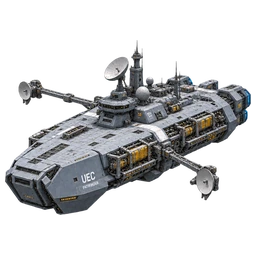 Pathfinder |
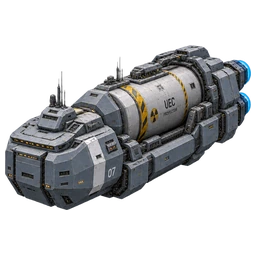 Prospector |
| ODO | 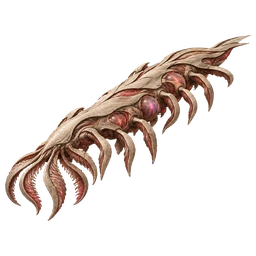 Forager |
 Tendril |
| ATH | 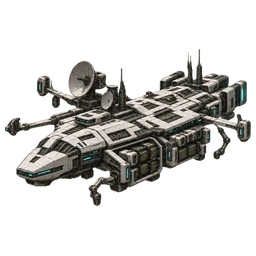 Seeker |
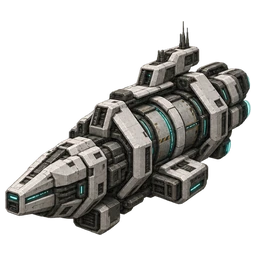 Lumen |
| STC | 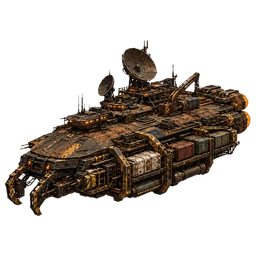 Scavenger |
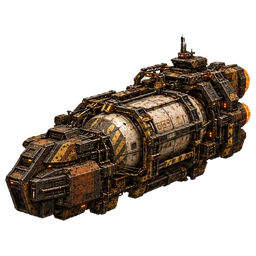 Wildcat |
The vessels are not ships you build or own — the expedition cost is charged at launch, and a lost expedition is the vessel not coming home.
Expeditions launch from the Commander page — one orbital run and one antimatter run can be in flight at the same time:
| Duration | Ticks | Cost (Ti / Si / Ur) | Orbitals | Antimatter | Loss risk |
|---|---|---|---|---|---|
| Half day | 24 | 8 000 / 8 000 / 2 000 | 2–6 | 2–5 | 5% |
| Full day | 48 | 15 000 / 15 000 / 4 000 | 4–14 | 3–9 | 10% |
Every vessel that survives brings something back — what varies is how much (small hauls are common, big ones rare). Recovered orbitals arrive mostly initiated (30% Ti / 30% Si / 30% Ur / 10% uninitiated).
Antimatter fuels the Warp Drive ETA bonus and can be donated to the alliance treasury. It cannot be mined, traded or raided — expeditions are its only source.
Recommended early research order
There's no single "correct" order — it depends on your strategy and what your alliance needs. But a few reliable openings exist.
The standard opener (works for everyone)
1. Fighter Operations       (6t)  → Fighters + Pods
2. Basic Sweep Sensors      (6t)  → Start scanning for orbitals
3. Titanium Processing      (10t) → Production scaling
4. Silicon Refinement       (10t) → Production scaling
5. Corvette Engineering     (12t) → Real combat ships
6. Basic Propulsion         (12t) → Faster strikes
56 ticks total. By tick ~60, you have Fighters + Corvettes available, two resource boosts running, and the first ETA reduction. From here, branches diverge based on role.
Aggressor (early PvP focus)
After the standard opener: - Frigate Engineering early (22t) — Black Frigates / Sentinels / Volts open up - Engines: Advanced Propulsion (26t) — −2 ticks ETA for fast surprise attacks - Scanning: Deep Space Scanners (30t) — see what you're attacking
Defender / Alliance anchor
After the standard opener: - PDS: Basic Defense Systems (14t) → Advanced (24t) - Counter-Intel: Scan Blockers (28t) → Advanced (22t) - Resources: continue Ti + Si into Tier II
Economy player
After the standard opener: - Titanium Processing II (22t) - Silicon Refinement II (22t) - Uranium Enrichment (16t) - Then loop into shipyard chain
There's no wrong choice, but skipping Fighter Operations first costs you the entire opening — you can't scan for orbitals without ships to fly missions, and orbitals are your economy.
Race-specific notes
Research costs and ticks are identical across all 4 playable races — no race gets a discount or speed bonus on any specific tech. However, race bonuses apply on top of research:
- UEC: +20% construction speed bonus stacks with all shipyard unlocks. Same techs, faster build times after unlock.
- ODO: +15% research speed bonus reduces every research's tick count. Same techs, faster completion.
- ATH: +20% research speed bonus — fastest research speed in the game. Same techs, fastest completion.
- STC: No research speed or construction speed bonus. Same techs, same speed.
The Void doesn't research. Their fleets are seeded by the game engine; they have no Commander, no research tree, and no progression.
Quick reference
| Concept | Detail |
|---|---|
| Total researches | 32 |
| Branches | 6 (Resources, Shipyard, Scanning, Counter-Intel, Engines, PDS) |
| Parallel research | No — one tech at a time per planet |
| Race-dependent costs | No |
| Buildings affecting research | None — no buildings in game |
| Critical first pick | Fighter Operations |
| Recommended second pick | Basic Sweep Sensors |
| Ship classes unlocked through Shipyard | 6 (Fi → Bs) |
| +1 build slot triggers | Frigate Engineering (slot 2), Cruiser Engineering (slot 3) |
| Max scan_bonus from research | +40 (= +8 scanner_level for intel scans) |
| Max scan_block from research | 85 (MAX, not sum; = +8 blocker_level) |
| Scan/jam boost levels (separate economy) | Buy per-level with Si + Ur, hard cap 999 |
| Max ETA reduction from research | −3 ticks (Warp Drive) |
| PDS classes unlocked through PDS branch | 5 (Pulse Laser → Shield Generator) |
| XP per research completion | 6 (or 12 in Speed Round) |
Documentation reflects Orbitarion v4.2. Last updated: 2026-08-25.